

Maintaining timber surfaces
Practical tips for the proper protection and maintenance of visible wooden surfaces that preserve the beauty, durability and character of KAGER houses.
Timber as an architectural material—and a responsibility
Timber is a central element of KAGER architecture. It is not merely structural, but carries a philosophy of living founded on timelessness, sustainability and connection with nature.
Natural materials, however, are not inert. They require thoughtful protection because both weather and time affect them. Properly protected and maintained, timber remains beautiful and stable for decades. The sun—our essential source of light—is also a factor that influences the long-term stability and appearance of timber surfaces.
How sunlight affects timber surfaces
Natural materials inevitably respond to external conditions. UV radiation breaks down lignin in timber, causing fading, loss of sheen, cracks and surface roughness. Elements on south and south-west façades and exposed architectural features such as pergolas and roof overhangs face the greatest exposure.
The architectural design of every KAGER house therefore considers timber protection from the outset. Shading, deeper roof overhangs and correctly positioned projections reduce direct exposure and significantly extend the service life of the timber structure. Protection is not based solely on the position of the house, however; material selection and preparation are equally important.
Protection begins in production
All load-bearing timber structures are made from glued laminated timber (glulam), distinguished by high load-bearing capacity and long-term stability. Glulam consists of multiple layers of kiln-dried timber bonded under precisely controlled conditions. By removing knots and other natural defects and bonding the laminated layers with their grain running in the same direction, we improve dimensional stability, reduce internal stresses, prevent warping and lower the likelihood of cracks.
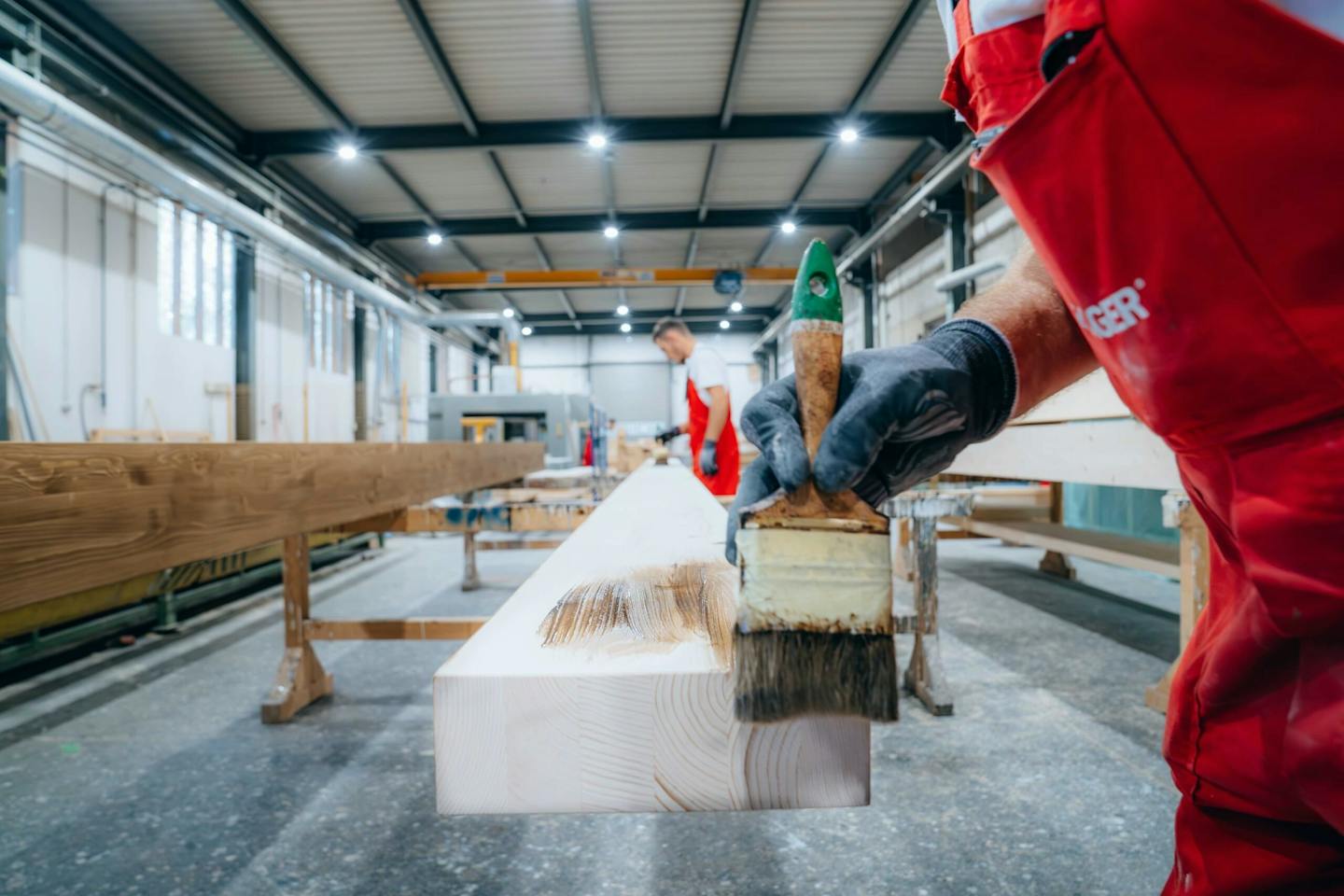
The first step towards long-term timber protection takes place during production. Every visible structural element is inspected and sanded by hand, protected with primers and prepared to absorb as little moisture and heat as possible. Structural joints, connections and transitions are designed to prevent standing water and local stresses in the timber. This significantly reduces the need for early maintenance while preserving the building’s long-term value.
Timber quality and certification
The value of timber surfaces comes not only from aesthetics, but also from verified origin, technical conformity and responsible material management. All timber in our houses is PEFC™ certified, confirming that it originates from sustainably managed forests. Glulam production complies with European standard EN 14080 and carries CE marking, confirming mechanical resistance and compliance with construction standards. We also hold RAL certification and meet the demanding German DIN 1052 standard. Together, these assure high levels of quality, safety and responsible material use.
How often is maintenance required?
Even the highest-quality timber eventually needs its protective coating refreshed. Timber surfaces require periodic recoating depending on the protection type, exposure and local conditions. Recommended intervals are:
Transparent wood stains should be renewed approximately every two years. In particularly exposed locations, such as higher elevations or positions receiving direct sunlight, surfaces should be monitored and recoated earlier if necessary.
Opaque coatings that completely cover the timber texture last longer and generally require renewal every five years.
Regular monitoring matters as much as the interval itself. Fading colour, roughness or reduced water repellence are reliable signs that renewal is due. Ongoing inspection prevents more extensive intervention later and preserves the house’s appearance.
Maintaining timber surfaces: professional execution and long-term support
Every renewal must be carried out correctly. Before application, the surface must be lightly sanded to remove the oxidised layer and ensure adhesion of the new coating. We use UV-resistant, vapour-permeable coatings designed for long-term exterior use.
As part of our customer service, we also offer professional refurbishment of visible timber surfaces. At KAGER HIŠA, maintenance is not a separate phase, but part of long-term architectural care. From initial design to organising contractors, we remain a reliable partner.
A single point of contact is available for maintenance work and all other service requests: