

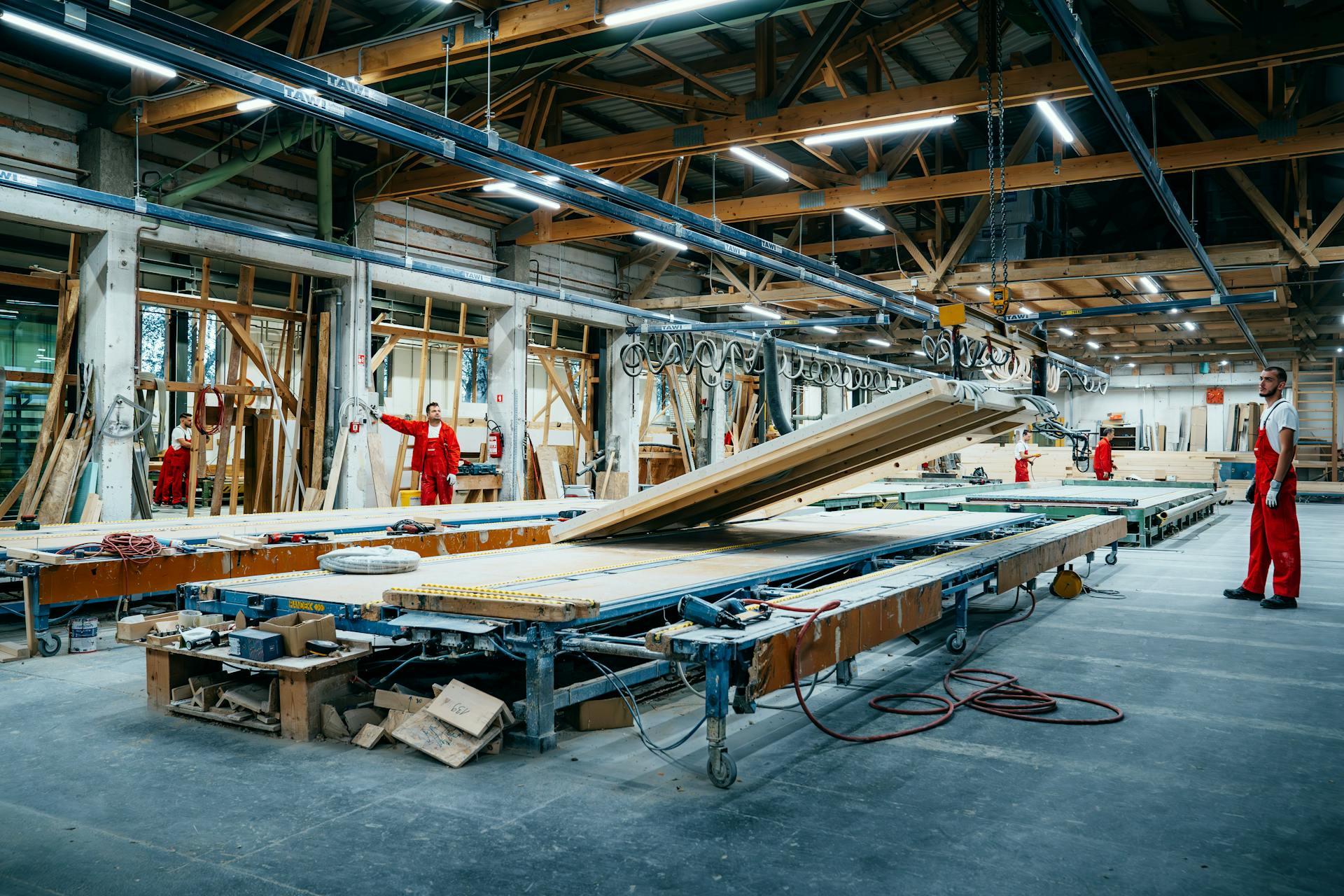
Production and assembly
What remains visible must be precisely made before assembly.
Exposed structures, joints and cuts cannot be hidden behind cladding. That is why quality begins with documentation, continues at our own production facility in Ptuj and is confirmed on the construction site.
At our own production facility, design meets material.
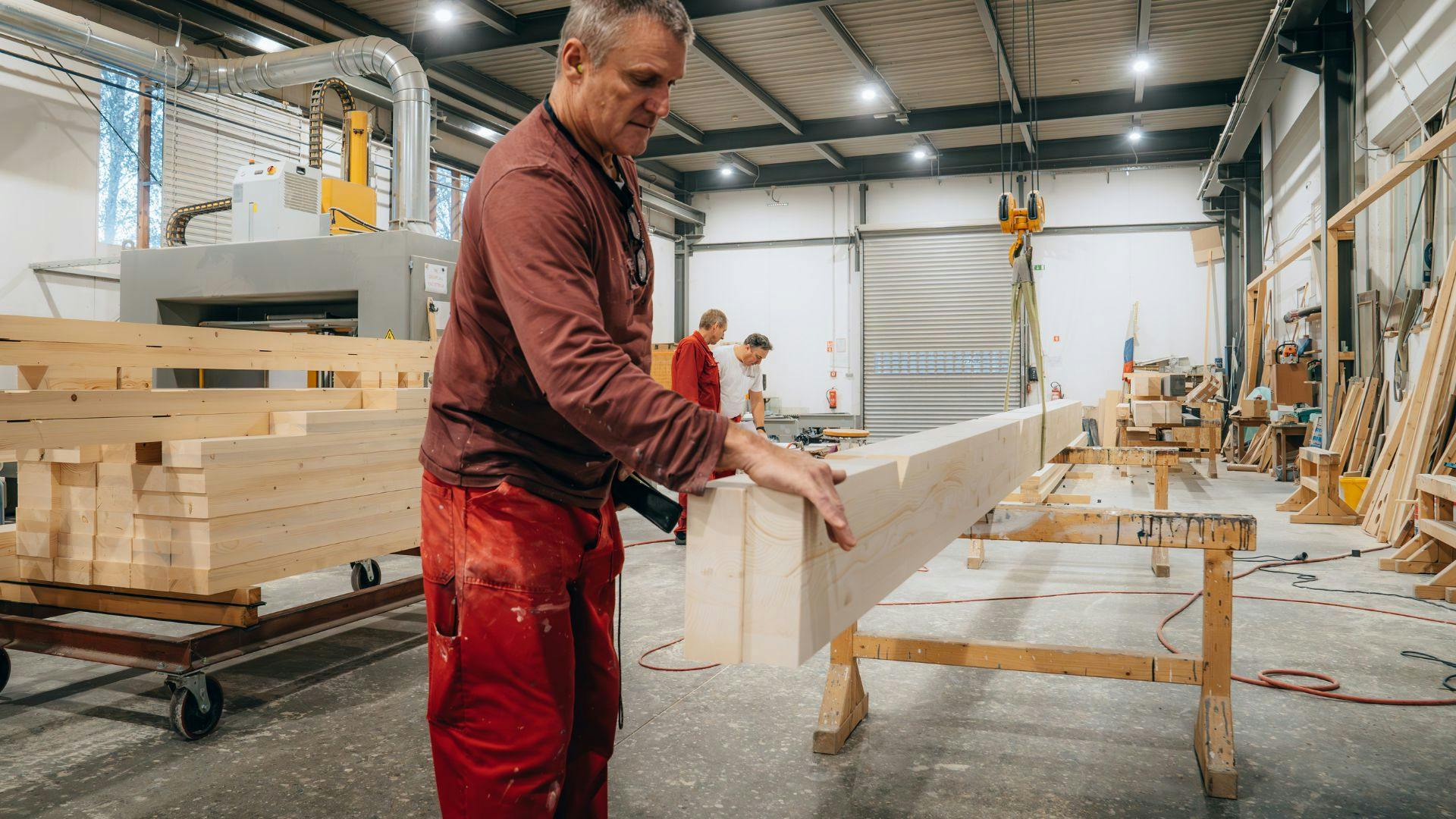
Architects, engineers, production specialists, joiners and carpenters work from the same project decisions. CNC machining ensures repeatable geometry, while experienced craftspeople assess the grain, exposed surface, joint and any deviation from what is expected.
This close connection between design and manufacturing is especially important in a home where the structure remains part of the interior.
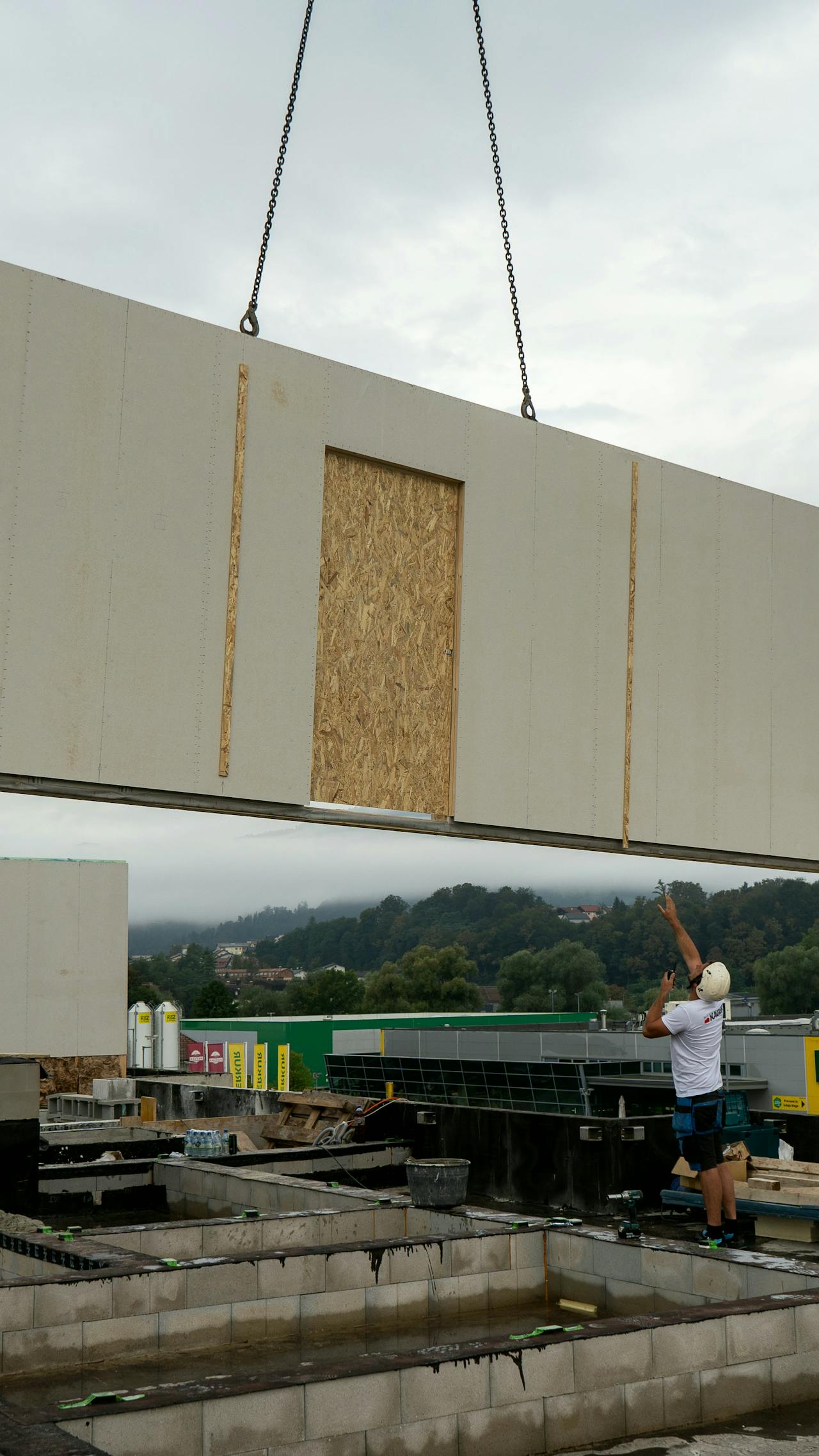
From an approved plan to an assembled home
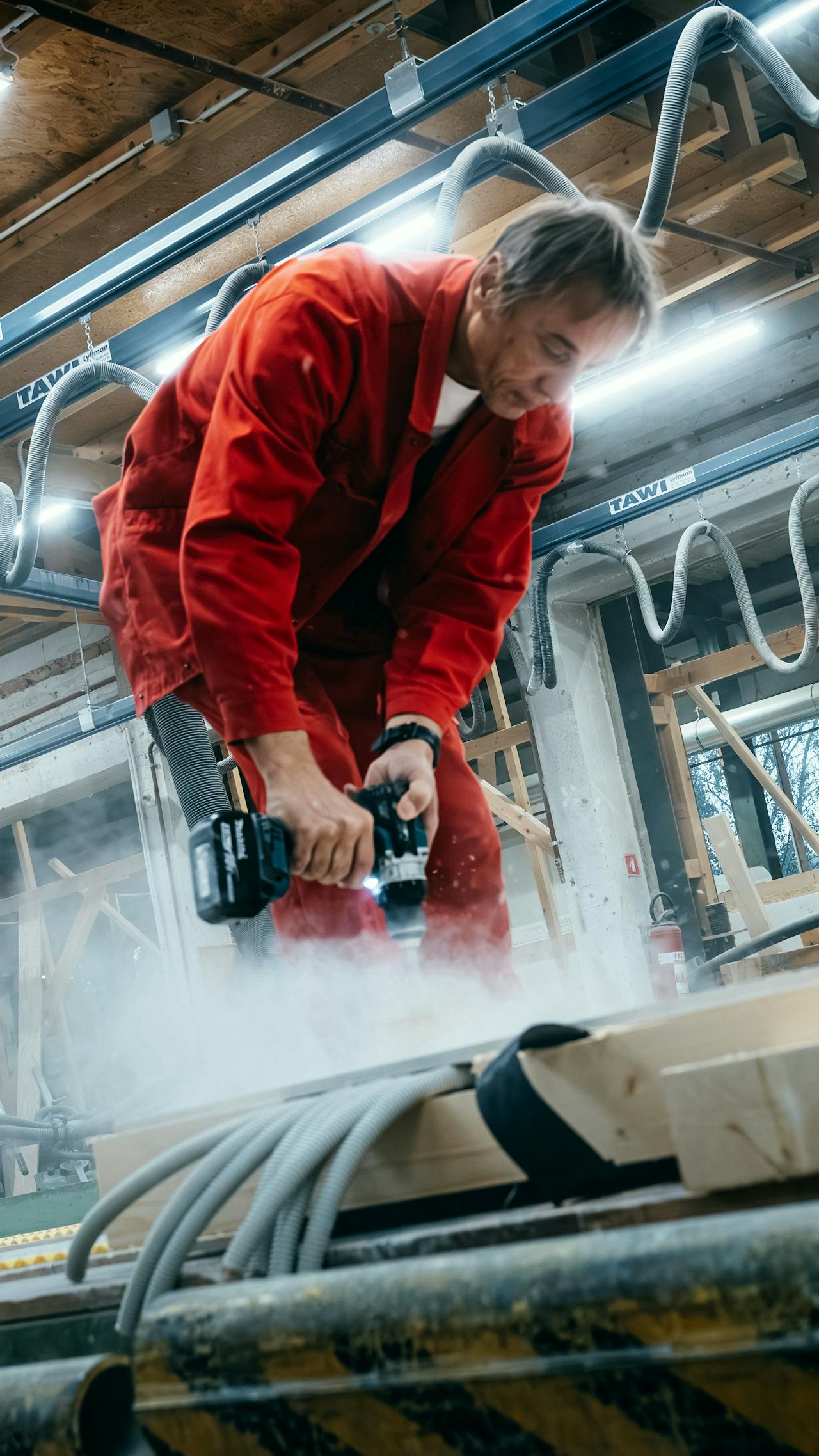
The machine repeats the geometry. The craftsperson assesses the timber.
After cutting, exposed surfaces are inspected, sanded and treated. The human eye recognises aspects of the material's character that a digital model cannot predict.
The real value lies in giving technology and craftsmanship clear roles, rather than choosing between them: the machine provides repeatability, while the craftsperson ensures the final character and surface quality.
See how a plan becomes an element.
A video from our production facility in Ptuj shows the scale of the elements, the work sequence and the connection between technology and craftsmanship.
Quality is checked throughout, not only at the end.
It must always be clear at the workstation which documentation is current.
We check that deliveries meet the requirements, markings and documentation.
We check critical dimensions before closing up the element and before dispatch.
We define the criteria for selecting and processing exposed timber before manufacturing.
We record any deviation, assess its impact and define the action and the person responsible.
Experience from assembly feeds back into documentation, production methods and subsequent projects.
Come and see how a plan becomes a home.
Visits to production and assembly reveal what a finished photograph cannot: the work sequence, the scale of the elements and the precision of exposed details.