

Earthquake-resistant Kager prefabricated houses with a timber structure
The wooden supporting structure of KAGER houses effectively absorbs seismic loads and provides a safe, stable and durable living environment.
The importance of earthquake safety
Earthquake-resistant Kager prefabricated houses
Today, more than ever, a house must provide a high level of earthquake resistance to ensure safe living. Our timber houses are based on technology developed over decades of research. Their load-bearing timber structure gives them a high capacity to absorb energy, enabling them to withstand both strong earthquakes and high wind loads.
Because of the properties of timber, the earthquake safety of prefabricated houses is difficult to compare with that of conventional masonry construction.
It even survived a magnitude 5.9 earthquake
A custom-built house in the municipality of Argenta
A custom-built house in the municipality of Argenta, in the province of Ferrara, stands just 42 kilometres from the epicentre of the 2012 Emilia earthquake. The earthquake that struck Emilia on 20 May 2012 was one of the most serious seismic events in Italy’s recent history. It reached a magnitude of 5.9 on the Richter scale, with its epicentre in Finale Emilia (MO). The house suffered no damage, while the surrounding buildings were visibly and extensively damaged, with numerous cracks and collapsed chimneys.
How does a Kager timber house respond to an earthquake?
Earthquake-resistant Kager prefabricated houses
During an earthquake, our timber house can absorb seismic waves extremely effectively, even at high magnitudes. The characteristics of Kager construction technology allow optimally controlled deformation, while the elasticity of timber enables the structure to return to its normal state without lasting effects once the loads subside. The low weight of the structure plays a fundamental role, as the forces acting on it are lower than those affecting a masonry house.
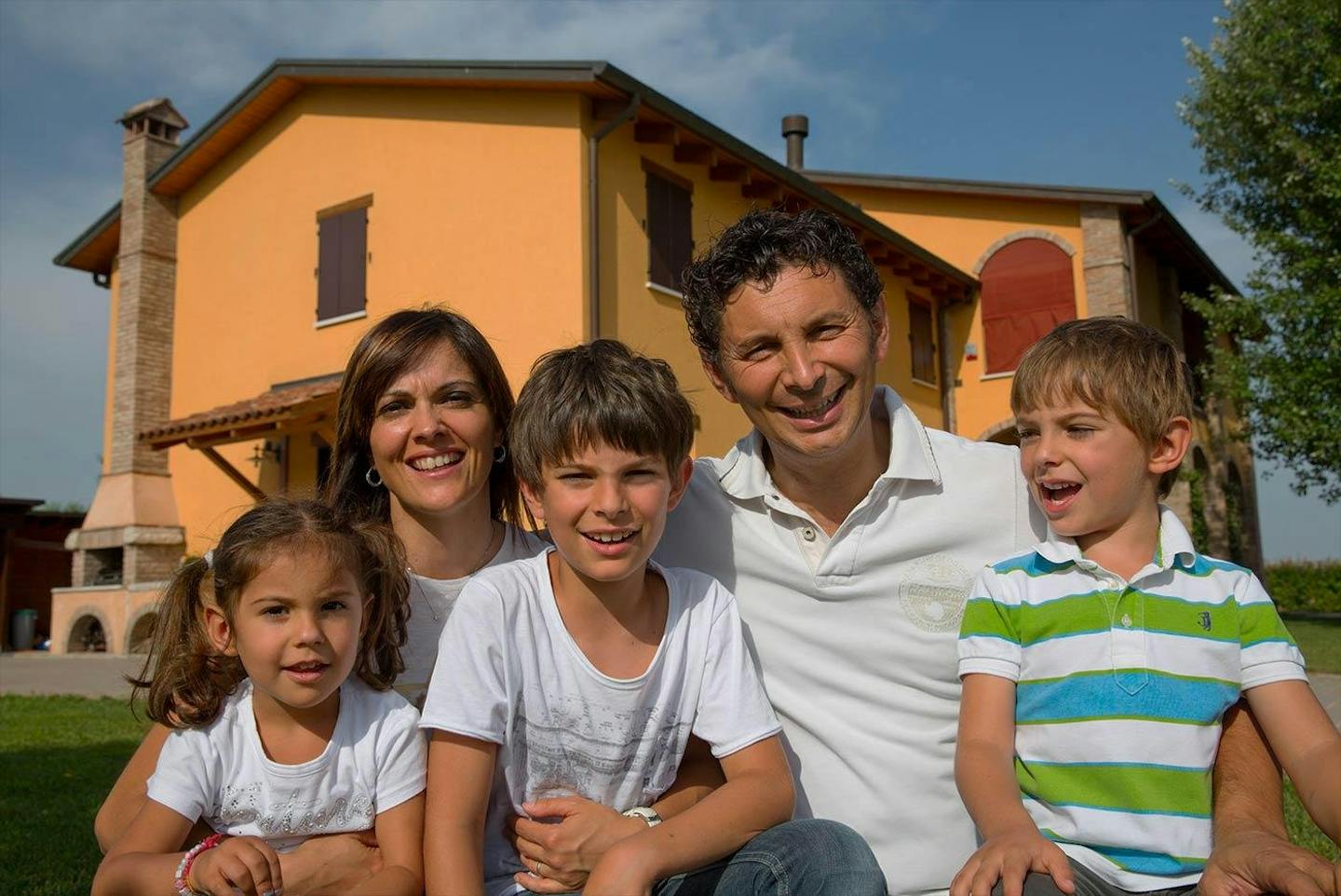
The story of Max Salani, the owner of the house in Argenta
This is an earthquake-resistant house
The owner, who was inside the house with his family during the earthquake, describes his experience as follows: “The house swayed and shook, but I thought: This is an earthquake-resistant house; it will hold.” And it did! A decade after one of Italy’s more serious earthquakes, it still stands in all its splendour.