

Efficient summer cooling with a heat pump and heat recovery ventilation
The combination of a heat pump, ventilation with recovery and, if necessary, an air conditioner ensures efficient cooling and a healthy summer climate.
How to maintain a pleasant indoor climate in the summer heat?
Combination of heat pump and recovery, with the option of including an air conditioner
For efficient and pleasant cooling in the summer months, the best solution is a combination of a heat pump and recovery, with the possibility of turning on the air conditioner during the summer peaks. In this way, the optimal living temperature (22-23 °C) is maintained even during extreme heat waves, without sudden temperature fluctuations and while maintaining air quality.
Heat pump as a solution for summer cooling
Advantages of active and passive cooling
Reversible heat pumpsenable two-way operation: heating in winter, cooling in summer. With active cooling, the cycle reverses – heat is released from inside the building to the surroundings. This system is particularly effective in wood-glass houses, where due to the large proportion of glass surfaces, there are higher solar gains.
Advantages of active cooling:
Precise temperature control
Possibility of operation in several zones (e.g. living room vs. sleeping areas)
Compatibility with low temperature floor heating
Atpassive cooling heat pump with geosondetakes advantage of the constant temperature of the earth. The system diverts the cooled ground water directly to the distribution system (e.g. floor or wall heating), without the operation of the compressor. This method is energy-saving and quiet, but effective only up to a certain thermal load of the room.
Passive cooling:
Very low power consumption
Minimal noise and maintenance
Suitable for energy passive houses
It is important to note that the supply water temperature must remain high enough (eg ≥18 °C) to prevent condensation on piping and floors, which can be harmful to materials and cause slippage.
The role of recovery in the summer season
Maintaining a pleasant indoor climate and bypass function
heat recovery ventilation systems prevent the intrusion of hot outside air in the summer, while at the same time ensuring constant ventilation of living spaces. The heat exchange between exhaust and supply air reduces temperature loads that would otherwise have to be compensated by the cooling system.
The recuperator does not cool on its own, but in combination with a heat pump or ground heat exchanger it significantly improves the energy efficiency of cooling. The result isstable and pleasant internal temperaturewithout drafts and feeling of "artificial cold". Ventilation also removes excess moisture from the room. This prevents the formation of mold, damage to the furniture and the feeling of stuffiness or excessive dryness.
Most modern systems allow t. i.bypass function, which bypasses heat transfer. When it gets cold outside at night, cold air is directly supplied to the room without being heated in the recuperator. This function is activated automatically (or manually) depending on the outside temperature.
On hot days, it is therefore necessary to set the recuperator to minimum flow, and at night to use the possibility of intensive ventilation with an activated bypass.
Is air conditioning still necessary?
Preparation for temperature extremes and recommended living temperature
Although the combination of a heat pump and recovery is sufficient for most of the summer, during peak times - especially in July and August - the temperature inside can still rise above the desired level. In these cases we recommendpreliminary preparation for the installation of the air conditioner, which enables fast and efficient cooling.
Optimum comfort is achieved by maintaining 22-23 °C, especially in sleeping and living areas. If the outside temperatures exceed 34 °C for several days in a row and the nights do not cool down below 20 °C, the inclusion of an air conditioner is a sensible addition.
Why pre-preparation?
It does not interfere with the architecture of the house
Allows for later technology selection
It adapts to the needs of the user and the location
Integrated systems: efficiency, comfort and air quality
Advantages of combining technologies
The combination of a heat pump and a ventilation system with recovery represents one of the most comprehensive and energy-efficient approaches to cooling, heating and ventilation in modern houses. When these systems are planned together early in the design phase, they enable coordinated operation without subsequent adjustments or compromises in the architecture.
Energy efficiencycomes from the synergy between the devices: the heat pump provides active or passive cooling or heating, while heat recovery ventilation ensures a constant flow of fresh air without energy losses. Since the air temperature is pre-treated, the need for intensive operation of individual components is reduced, which leads to lower electricity consumption and less mechanical wear.
Another important advantage iseven temperature distribution in all rooms. Integrated systems enable a stable indoor climate without local temperature jumps, which are otherwise common in the operation of individual air conditioning units. This is especially important with floor or wall distribution, where the heat exchange is slower but more uniform.
From the point of viewof healththe combination of systems ensures a constant supply of fresh, filtered air and the removal of carbon dioxide, moisture and potential allergens. This reduces the possibility of mold and improves air quality, which has a direct impact on the well-being and long-term health of the residents.
Flexibility in choosing additional equipmentis one of the additional reasons for. Cleverly planned systems allow everything necessary to be prepared during construction for the later installation of the air conditioning system - if the user does not decide on it right away. During the heat waves in July and August, air conditioning is often indispensable, so pre-preparation is an important step towards long-term adaptability at home.
Modern systems make it possiblefully automated operation– temperatures, time programs and air flows are adjusted according to the conditions outside and the needs inside. Heat during the day, cooling at night, absence during the weekend - all this is detected by sensors that automatically adjust the operation, without the need for manual intervention.
The key to efficiency iscoordinated action: the heat pump maintains the basic temperature, the recovery enables cooling with night air, and the air conditioner is only activated when the external conditions exceed the capabilities of the other systems. Thus, no element is idle, consumption remains low, and the temperature is stable.
The combination of these technologies thus enables an advanced, long-term sustainable and habitable system that combines energy efficiency, comfort and a healthy living space.
Regular maintenance for summer efficiency
Optimum performance and service: key summer tips
For efficient cooling and a pleasant indoor climate in the hot months, it is important to properly maintain the heat pump and recovery system. With timely inspections, cleaning and appropriate settings, we ensure optimal operation, reduce energy consumption and extend the life of devices.
Key summer tips for optimal performance and service
Have the heat pump serviced before the start of the seasonThe service should include inspection of key components, cleaning, checking of the cooling circuit and adjustment of the cooling system. A regularly maintained device works more quietly, consumes less energy and provides reliable cooling even under the highest loads.
Set the system correctly for summer operationSwitch the system from heating mode to cooling mode in time and check that all settings are properly adjusted. Pre-prepared summer settings simplify the switchover and prevent possible operational errors.
For passive cooling, set the water temperature above 18 °CIf the system enables passive cooling (e.g. via a geosonde), the temperature of the cooling water should be high enough to prevent condensation on surfaces and pipes. This is especially important for floor or wall distribution.
Clogged filters obstruct the flow of air and reduce the efficiency of ventilation. It is recommendedregular cleaning or changing filters every few months, especially before summer, when the system is more active.
Maintenance of the outdoor unit when removing heat from the room
The key to efficiency is proper maintenance of the entire system
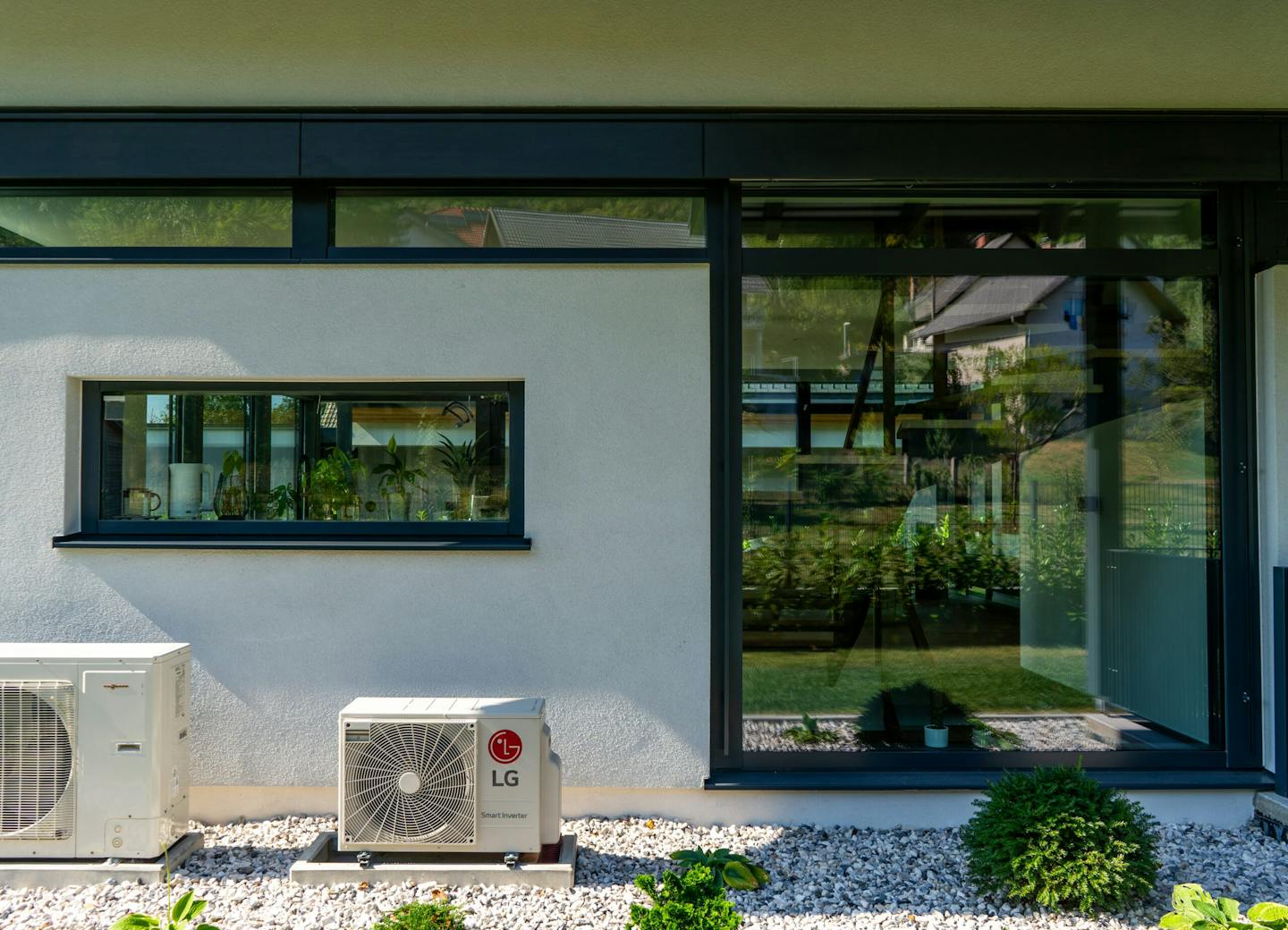
The outdoor unit of the heat pump or air conditioner plays a key role in removing heat from the room. If it is covered with dust, leaves or pollen, the efficiency of the system decreases quickly.
Recommendations for summer maintenance of the outdoor unit:
Twice a year (before and during the summer season) clean the grids and lamella surfaces of the heat exchanger.
Do not cover the unit with improvised coverings or overly closed masks.
If the appearance of the unit bothers you, consider an aesthetic solution (eg a pergola or plant screen), taking care not to obstruct the air flow on any side.
With proper maintenance of the entire system, you will ensure a stable temperature even during the hottest summer heat, extend the life of the equipment and preserve the energy efficiency of your home.