

Slovenian Architectural Heritage
This 2019 story explores how Slovenian hayracks, farmhouses in Slovenske gorice and Alpine houses inspired individual architectural designs at KAGER.
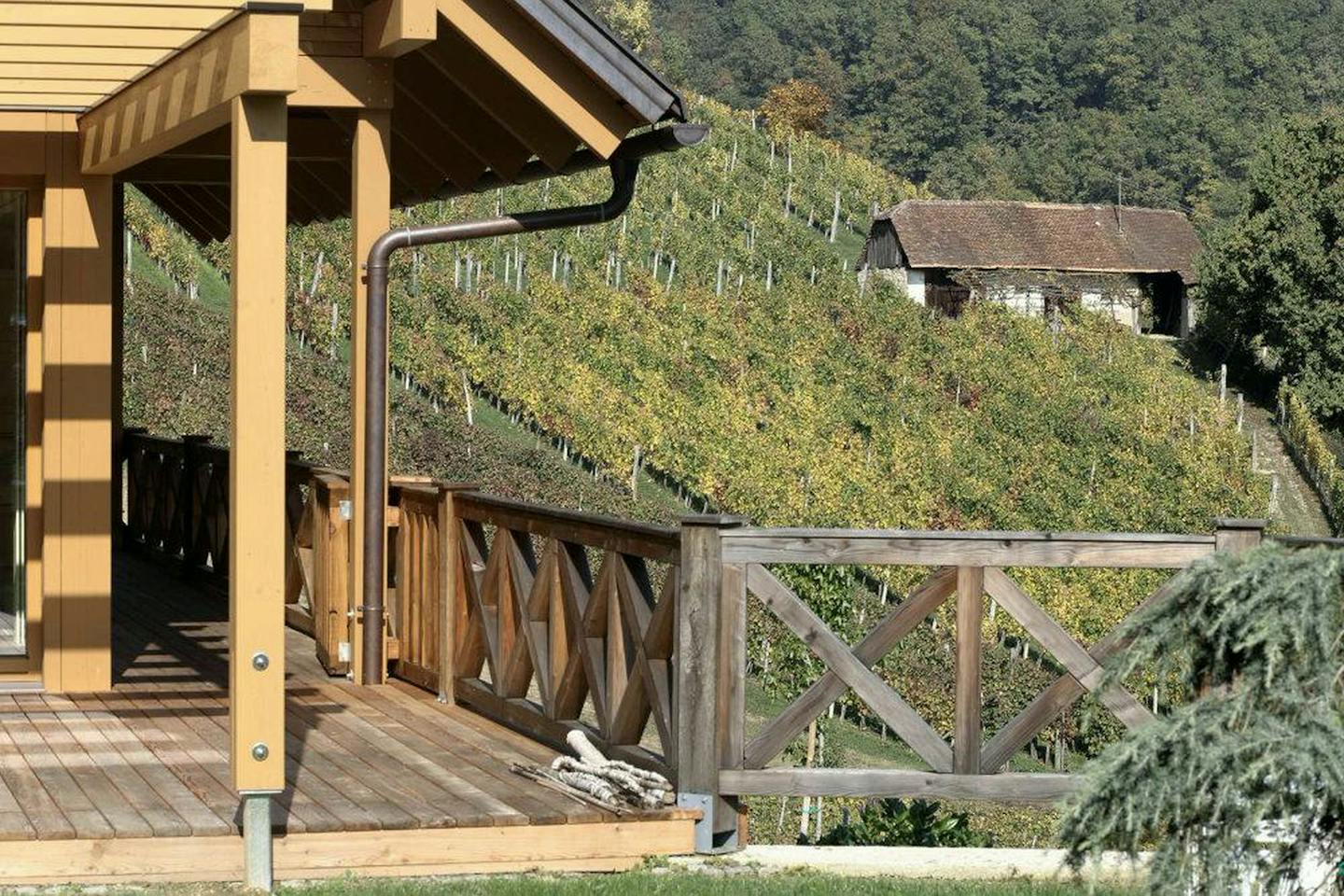
In November 2019, we presented three examples of how Slovenian building traditions inspire individual KAGER architecture: the hayrack, the farmhouse of Slovenske gorice and an Alpine house in the Logar Valley.
The Slovenian Hayrack
The Slovenian kozolec is a freestanding, largely open timber structure with a roof, used to dry and store crops on horizontal rails. It is a distinctive example of frame construction. The clear arrangement of its vertical and horizontal structural elements inspires our houses.
Cross-bracing gives the hayrack additional stability. In a contemporary timber-and-glass house, the structural design brings together the timber frame, wall infills and large glazed surfaces. The traditional rhythm of timber gains a new expression suited to living spaces.
A Farmhouse in Slovenske Gorice
Traditional farmhouses in Slovenske gorice often have an L-shaped plan. Originally built from clay and roofed with thatch, they were later covered with red roof tiles. The gable faced south, with a granary and stable continuing around the corner.
That form inspired the KAGER house featured in the article. Living spaces occupy the elongated wing, with a carport at the corner. Timber pergolas at the front create its distinctive appearance and provide additional solar protection.
The Alpine House
A very steep timber roof, from which snow could slide more easily, is characteristic of a traditional Alpine house. The residential part was usually built from stone, while the agricultural part was timber. Small windows were closed with sliding timber shutters.
The house we reconstructed in the Logar Valley had been completely destroyed by fire during the Second World War. It later served as a family home, with living rooms and a kitchen on the ground floor and bedrooms upstairs. Reconstruction changed its use: rooms and apartments became part of the local tourism accommodation.