

Is Summer Really the Best Time to Build?
This February 2025 article explores winter assembly, factory preparation of timber components and year-round building planned around actual site conditions.
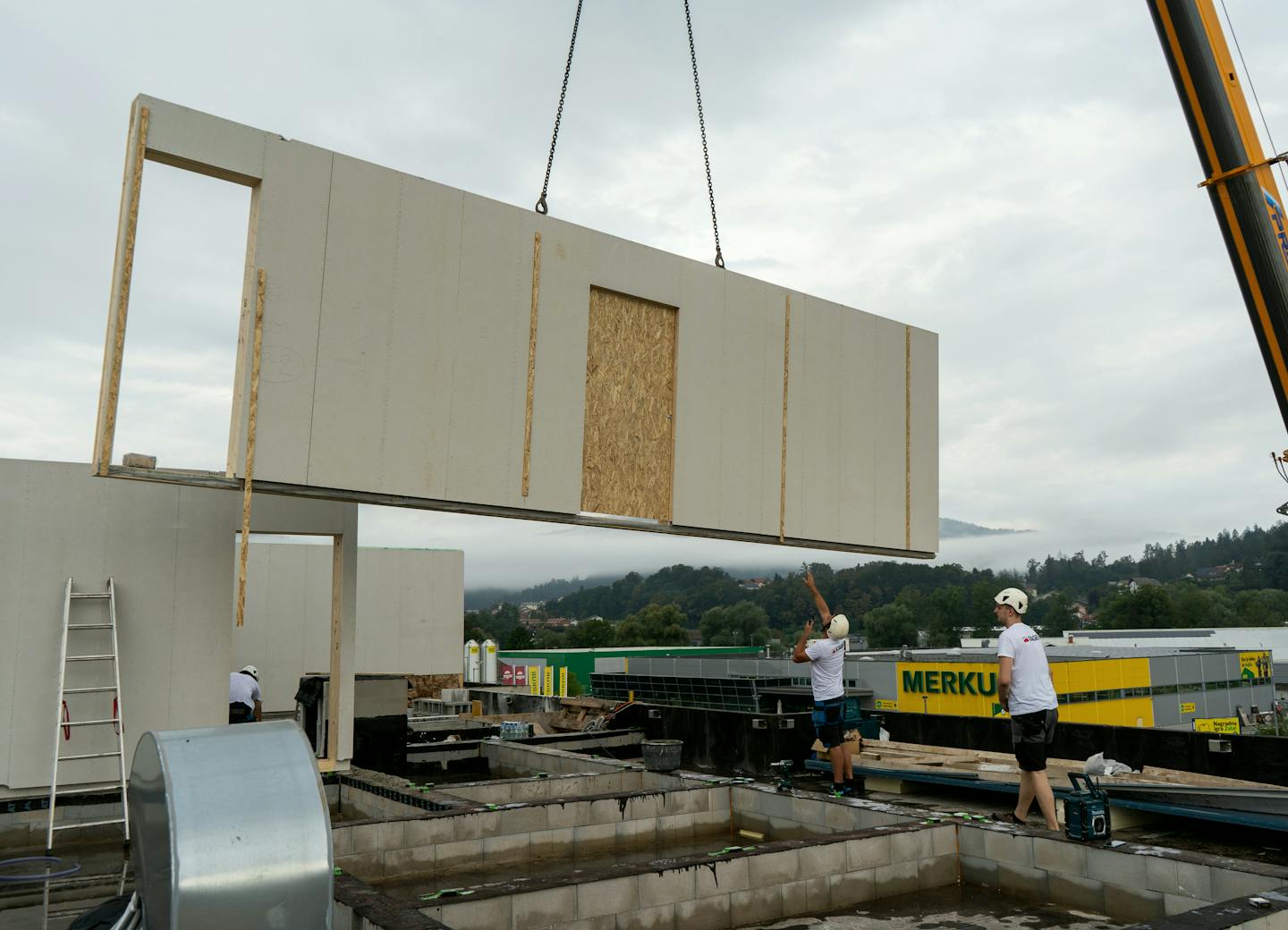
Building Is Not Limited to Summer
Summer is not the only suitable time to erect a timber house. Materials, component preparation, workmanship and actual site conditions matter alongside the season. Factory preparation moves a large part of the work into a controlled environment, allowing the site team to concentrate on coordinated assembly.
Timber quality and moisture, joint details and protection during work influence the structure’s behaviour. Scheduling should therefore reflect the project, site readiness and weather forecast. Winter can also offer good conditions when organisation responds to the actual situation.
Four Considerations for Winter Assembly
Site cleanliness: favourable dry or frozen conditions can mean less mud and dirt. This matters especially where exposed timber surfaces form part of the finished architecture. Protection must respond to the conditions rather than simply the calendar.
Moisture: components need appropriate protection during storage, transport and assembly. Actual precipitation and site conditions matter more than the season’s name. Correct timber handling helps limit deformation and other unwanted changes.
Stability: accurate structural preparation and correct connections are essential to coordinated construction. The design defines the load-bearing elements, their connections and the assembly sequence. Good organisation allows these details to be checked and prepared before delivery to site.
Continuing work in spring: winter assembly can help organise interior work and landscaping for warmer months. The sequence should be coordinated with project scope, deliveries and conditions, linking assembly to the tasks that follow and the plan for completing the home.
Production, Materials and Rapid Assembly
In the construction described, KAGER used spruce glued laminated timber, BSH, for load-bearing structures. Its preparation and quality support dimensional stability and precise joints. High-quality glulam still requires suitable moisture protection and correct installation, so materials and workmanship must be considered together.
Timber components are cut by machine, finished and prepared under controlled production conditions. They arrive ready for assembly, reducing site work and simplifying organisation. The more details are coordinated in preparation, the clearer the assembly sequence becomes.
Dry assembly reduces wet processes in the timber structure, while foundations, concrete work and other tasks have their own weather and temperature requirements. Year-round building therefore means sound preparation, monitoring conditions and skilled execution, rather than independence from weather.